Recurring charges creep up when renewals and ownership are spread across teams.

Signs to look for
Overlapping apps, unused seats and renewals that nobody owns.
What a review can assess
Recent invoices, vendor contracts, seat activity and renewal dates.
Practical changes to consider
Build a renewal calendar, flag duplicate subscriptions and confirm usage before changing plans.
Where unnecessary spending hides
A subscription can be useful and still be the wrong size for your team. Look for licences assigned to former staff, tools bought by different departments for the same job, and annual renewals that proceed without a named owner. Compare the cost of keeping a service with the cost and disruption of changing it.
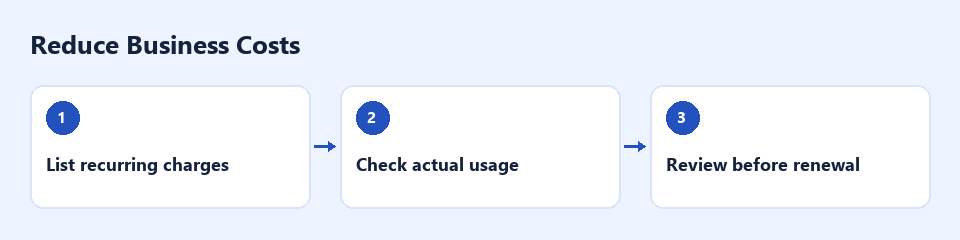
A practical first review
Start with a recent invoice list and an inventory of the tools people actually use. For each service, record the owner, business purpose, renewal date and cancellation conditions. Separate confirmed duplication from items that need a conversation with the team. A public website cannot reveal these costs.
How implementation could work
Prioritise a small number of changes that are easy to reverse. Options may include reminders before renewal, licence-use reporting, approval steps for new subscriptions, and connecting existing tools so that a second service is no longer needed. Agree a baseline and review the next bill before counting a saving.
Monthly support that stays accountable
A managed service can maintain the renewal calendar, flag exceptions and prepare a monthly action list for your approval. Agree responsibilities and fees before work starts; savings depend on your contracts, usage and decisions.
Discuss a monthly service
Discuss a monthly spend review and renewal reminders.

