Understanding Chatbots: A Comprehensive Guide
In today’s digital age, chatbots have become ubiquitous across various online platforms. From customer service to virtual assistants, chatbots play a crucial role in enhancing user experiences and streamlining interactions. This article aims to delve into the world of chatbots, exploring what they are, how they work, and their practical applications.
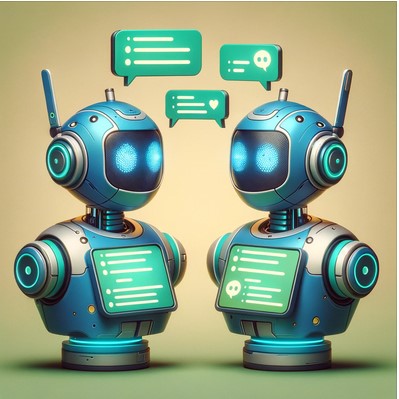
What is a Chatbot?
A chatbot, short for “chat robot,” is a computer program designed to simulate conversation with human users, typically through text or voice interfaces. These intelligent systems utilize natural language processing (NLP) and artificial intelligence (AI) algorithms to understand user inputs and generate appropriate responses.
How Do Chatbots Work?
Chatbots operate on a set of predefined rules or utilize machine learning algorithms to adapt and improve their responses over time. There are primarily two types of chatbots:
- Rule-Based Chatbots: Rule-based chatbots follow predefined rules and patterns to interpret user queries and generate responses. These rules are typically programmed by developers based on anticipated user inputs.
- AI-Powered Chatbots: AI-powered chatbots leverage machine learning algorithms to analyze and understand user inputs. These chatbots can learn from interactions, continuously improving their understanding and responses.
Practical Applications of Chatbots:
Chatbots find applications across various industries and domains, revolutionizing how businesses interact with customers and streamline internal processes. Some common applications include:
- Customer Service: Chatbots are widely used in customer service to provide instant support and assistance to users. They can handle frequently asked questions, troubleshoot issues, and escalate complex queries to human agents when necessary.
- E-commerce: In the realm of e-commerce, chatbots enhance user experiences by offering personalized product recommendations, assisting with purchases, and providing order status updates.
- Virtual Assistants: Personal virtual assistants like Siri, Google Assistant, and Amazon Alexa utilize chatbot technology to perform tasks, answer questions, set reminders, and control smart home devices.
- Marketing and Sales: Chatbots play a crucial role in marketing and sales by engaging with potential customers, qualifying leads, and guiding users through the sales funnel with personalized recommendations.
- Internal Operations: Within organizations, chatbots streamline internal operations by automating routine tasks, scheduling meetings, and providing employees with quick access to information.
Find chatbots have emerged as indispensable tools in today’s digital landscape, offering efficient and personalized interactions across various platforms and industries. Whether it’s providing customer support, assisting with online shopping, or enhancing productivity within organizations, chatbots continue to evolve and shape the way we interact with technology.
By understanding the fundamentals of chatbots and their practical applications, businesses can harness the power of this transformative technology to drive innovation and improve user experiences.
For further information on chatbots and their implementation strategies, feel free to explore our resources or contact us for personalized assistance.
These chatbots offer a range of features and are suitable for various purposes, from personal use to business and learning applications.
ChatGPT: Known for its versatility and advanced chat generative AI features3
Microsoft Copilot: Built on GPT-4, it offers access to the internet and works like a search engine with information on current events2
Bing Chat Enterprise: Offers organizations in the Microsoft ecosystem 30 responses per conversation and is powered by GPT-43
Google Bard: Infused with the Google experience, it provides up-to-date information and is powered by GPT models2
Claude: Known for its longest conversation memory1
Pi: Designed for personal use1
Poe: Incorporates multiple AI models1
Perplexity: Known for internet deep dives1
Grok: Notable for its safety off feature1
HuggingChat: Best for building or exploring how to build a chatbot2

