Understanding where electricity prices are headed is critical for businesses that want to control energy costs, reduce risk, and time their procurement decisions correctly. One of the most important tools used by energy suppliers, traders, and large commercial buyers is the Wholesale Power Forward Curve.
This indicator provides a long-term view of electricity pricing expectations and plays a central role in how commercial electricity contracts are priced.
What Is the Wholesale Power Forward Curve?
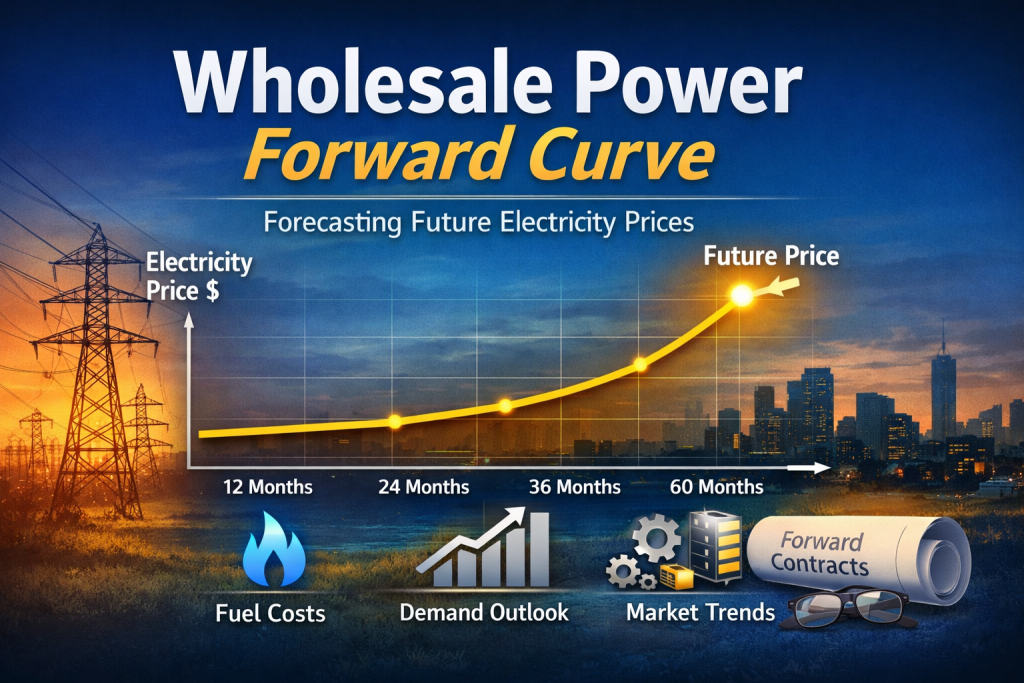
The Wholesale Power Forward Curve shows the market’s expected price of electricity for future delivery, typically spanning 12 to 60 months. Each point on the curve represents a price at which buyers and sellers are willing to lock in electricity today for use months or years into the future.
Rather than reflecting current spot prices, the forward curve captures market sentiment about future conditions, including fuel costs, demand growth, generation availability, and regulatory changes.
For businesses signing fixed-rate electricity contracts, this curve is essentially the price foundation suppliers use when building offers.
Why the Forward Curve Matters for Business Electricity Rates
1. It Reveals Where Prices Are Headed
If the forward curve is trending upward, the market expects higher electricity prices in the future. If it slopes downward or remains flat, it suggests stable or declining long-term pricing. Businesses can use this insight to decide whether to lock in rates now or wait.
2. It Drives Supplier Pricing
Energy suppliers hedge power in wholesale markets using the forward curve. The rates they offer businesses are directly tied to these future prices. When the curve rises, contract prices usually follow. When it softens, suppliers gain flexibility to offer more competitive rates.
3. It Reflects Supply and Demand Expectations
The curve incorporates expectations around:
- Future electricity demand growth
- Power plant retirements or new generation
- Fuel price outlooks (especially natural gas)
- Transmission constraints and policy changes
This makes it a powerful summary of long-term market fundamentals, not just short-term volatility.
4. It Helps Manage Budget Risk
By understanding forward prices, businesses can avoid locking in contracts at market peaks. The curve helps procurement teams plan budgets, evaluate contract terms, and reduce exposure to unexpected price swings.
How Businesses Use the Forward Curve Strategically
- Timing contract renewals to avoid rising price environments
- Comparing contract lengths (12, 24, 36, or 60 months)
- Evaluating risk vs. stability when choosing fixed pricing
- Supporting long-term energy budgeting and forecasting
Instead of reacting to headlines or short-term spikes, the forward curve allows businesses to make data-driven electricity decisions.
Current Indicator Status: 🟡 Yellow – Balanced Market Conditions
A Yellow status means the wholesale power forward curve is currently balanced, with no strong signals of aggressive price increases or sharp declines. This typically indicates:
- Supply and demand expectations are relatively aligned
- Risk premiums are moderate
- Buyers still have opportunities, but timing matters
In balanced conditions, businesses benefit from monitoring the curve closely, as shifts in fuel prices, load growth, or generation availability can quickly change the outlook.
Why This Indicator Should Be on Every Business’s Radar
The Wholesale Power Forward Curve is one of the clearest windows into future electricity pricing. It translates complex market forces into a single, easy-to-read signal that helps businesses understand not just where prices are today but where they are likely going next.
For companies that want predictable energy costs and smarter procurement decisions, tracking the forward curve is not optional it’s essential.

