Purchasing delays and rushed orders can lead to avoidable costs and stock gaps.

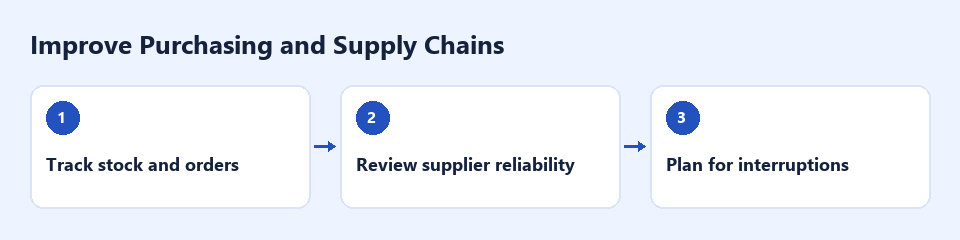
Signs to look for
Expedited shipping, missed reorder points and dependence on one supplier.
What a review can assess
Supplier terms, order history, delivery reliability and inventory data you choose to provide.
Practical changes to consider
Define reorder thresholds, track supplier performance and document backup options.
See the causes of urgent orders
Repeated expedited purchases may point to late information, unclear approval steps or unreliable supplier lead times. The best starting point is the order history behind the rush, rather than assuming a cheaper supplier will solve it.
What the review needs
Use purchasing records, delivery dates and stock information your team chooses to share. Separate changing demand from missed reorder signals, and check which items depend on one supplier. Review any proposed supplier change against your quality and operating requirements.
Make exceptions visible
Possible solutions include reorder reminders, purchase-approval workflows and a dashboard for late deliveries. Test alerts on a small group of items first so that teams receive useful warnings rather than a constant stream of noise.
Managed operational support
Discuss monthly supplier reporting and checks on delayed orders, emergency purchases and unresolved exceptions. Your team retains approval of orders and suppliers. Cost and availability depend on real demand, contract terms and market conditions.
Discuss a monthly service
Discuss recurring purchasing reports and exception alerts.

