Utility bills can change because of rates, usage or the timing of demand.

Signs to look for
Unexpected bill increases, inconsistent charges and unusually high usage outside business hours.
What a review can assess
Utility bills you provide, tariff details and operating hours. Interval usage data helps explain peaks where available.
Practical changes to consider
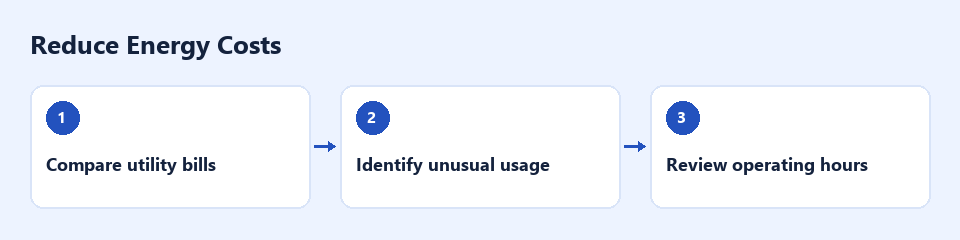
Compare billing periods, investigate unusual loads and review operating schedules with the people responsible for the equipment.
Separate price changes from usage changes
A higher bill does not always mean equipment is using more energy. Billing periods, rates and operating hours can change together. Comparing like-for-like information helps identify which questions are worth investigating.
Build a useful starting picture
Gather recent bills, operating schedules and tariff information you choose to share. Where interval data is available, compare usage during open and closed hours. Confirm unusual charges with the supplier or responsible adviser rather than treating an automated flag as a confirmed error.
Choose practical follow-up
Possible projects include a monthly usage dashboard, alerts for unexpected changes and reminders to review contracts. Equipment schedules and physical changes should be checked by the people responsible for safe operation. A website scan cannot measure energy consumption.
Keep the evidence visible
Discuss ongoing bill review and tracking of agreed actions. Compare periods carefully and record changes in weather, opening hours or activity where relevant. Any estimated saving should be checked against actual subsequent bills; outcomes are not guaranteed.
Discuss a monthly service
Discuss monthly bill reviews and usage tracking.
Explore a related 7Chats service - Explore Energy Bot

